

Palaces and monuments
Explore all places
7 places found
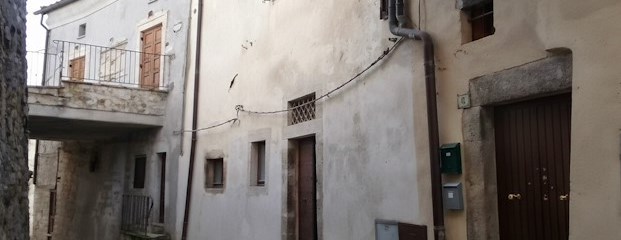
De Rubeis or De Rossi Palace
De Rubeis or De Rossi Palace preserves traces of tempera decorations of the XV-XVI century, with the heraldic emblem of the family, figures, floral cornices and various inscriptions.
Read more De Rubeis or De Rossi Palace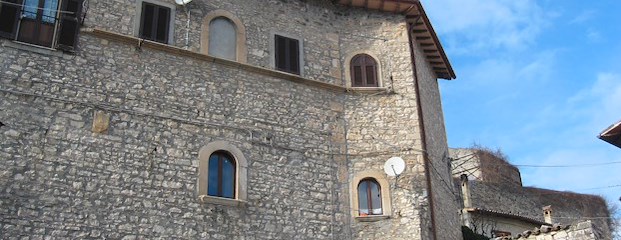
Moriconi Palace and Porta Vecchia
The late Medieval Moriconi Palace (with the coat of arms on the facade) is located close to the first wall of the town and occupies the next walls of the thirteenth century, near Porta Vecchia or Porta di Sant’Agnese (thirteenth century passage partially transformed in the modern age to allow the passage of the vehicles).
Read more Moriconi Palace and Porta Vecchia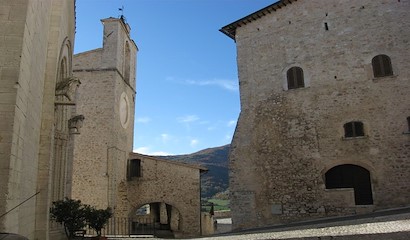
Palazzo dei Priori "Carlo Innocenzi"
Palazzo dei Priori is a public palace from the fifteenth to the nineteenth century.
Read more Palazzo dei Priori "Carlo Innocenzi"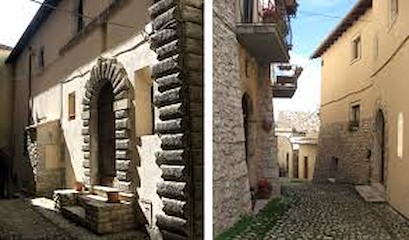
Piersanti Palace
Piersanti Palace, rebuilt between 1704 and 1709 by the jurist Antonio Piersanti (helped by his Roman patron, Cardinal. Gaspare Carpegna), is composed by two buildings and is characterized by a corner, a rusticated portal and a small tanker to collect rainwater.
Read more Piersanti Palace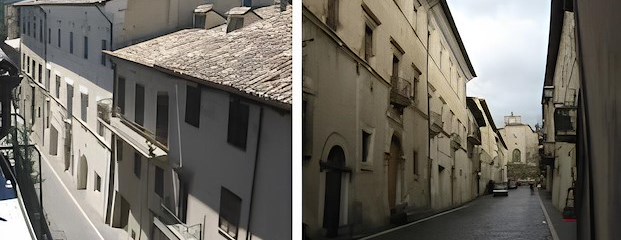
Rainaldi-Bernabei Palace
The Rinaldi-Bernabei Palace is built in 1755 by the unification of several buildings arose on the site of the former monastic structures of the Church of St. John the Baptist.
Read more Rainaldi-Bernabei Palace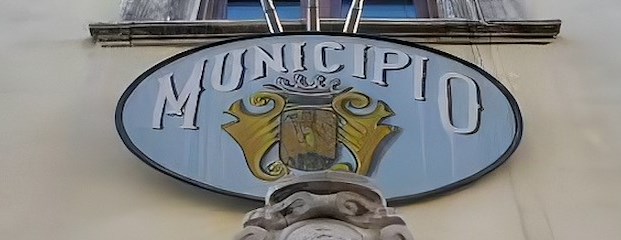
Rotondi Palace (current Municipality)
Rotondi Palace, since 1927 the Municipality, has on its rusticated portal a bearded head in stucco with horns framing the heraldic shield, according to a grotesque and baroque taste.
Read more Rotondi Palace (current Municipality)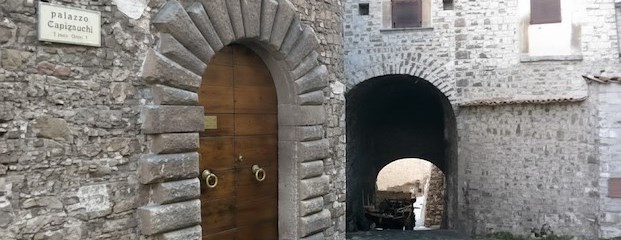
Sinibaldi-Congiunti Palace
The XVII-XVIII century Sinibaldi-Congiunti Palace, connected to Porta San Pietro, which belongs to the earliest city walls, has two special rusticated portals and preserves traces of a Renaissance closed portico.
Read more Sinibaldi-Congiunti Palace