

Description
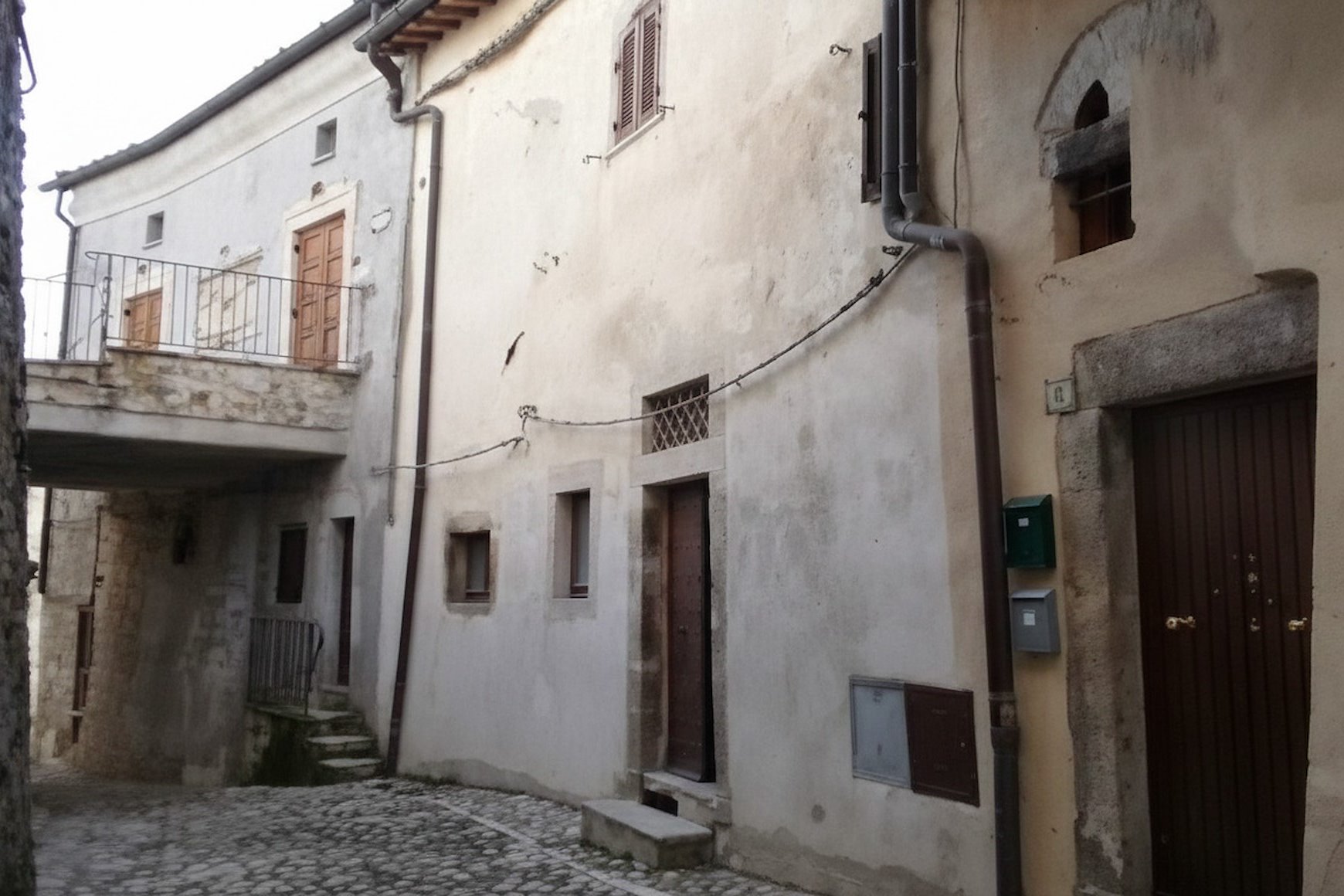
Giovanni Antonio De Rossi, the well-known architect of the seventeenth century baroque, comes from a branch of the family transplanted to Rome. Adjacent to the Palazzo dei Priori, there is the ancient home of Rubei. The building currently owned by the city (already Rosati), has obvious signs of its past glories. Delicate tempera decorations of the XV-XVI century emerge from the walls. The unpublished paintings show the familiar emblem of Rubeis within a shield supported by two heroes, as well as various inscriptions and mottos. The family coat of arms is also on the lintel of the Church of San Nicola and in the monuments in San Francisco. The patrons of the paintings are members of one of the oldest and most notable families of Monteleone di Spoleto. There is a documentation at least since 1330, with the will of the Robertio Berardo, called “the red” or "Rubeus" (from whom comes from the name Rubeis, De Rubeis or De Rossi). The famous architect Giovanni Antonio De Rossi (Rome, 1616 - Rome, 1695) comes from a branch of the family, who moved to Rome as early as the Sixteenth century, but who had always relationships with Monteleone. Near Via del Teatro, at number 4, adjacent to the Palazzo dei Priori (now the Teatro Comunale "Carlo Innocenzi"), is the old residence of Rubei or Rossi family. The building is currently owned by the city (already Rosati) and shows evident signs of its past splendor and prestige, with traces of a monumental fireplace and stone framed doors, still present in the palace.
In some rooms, due to the execution of restoring works, important and delicate decorations and figures in tempera, dating to the XV-XVI century emerge from the wall. The unpublished paintings show, above a passage door, the familiar emblem of Rubeis, a shield supported by two heroes. There are also inscriptions and mottos, waiting to be revealed and studied. As evidence of the presence of the family in this area of the country, there is at the building with the civic number 10, a sixteenth-century architrave, broken into two pieces, and re-used as a doorway, with the inscription: "JULIUS · DE · RUBEIS ". The clients of the tempera paintings are members of one of the oldest and most notable families of Monteleone di Spoleto, whom different community leaders come from (clerics, notaries, architects). There is a documentation at least from 1330, in the drafting of Nallo of Syniballo and Stefanuccio Meneconi (Menetoni) notaries (Sinibaldi) of Berardo Robertio will, called the red or "Rubeus", from which the surname De Rubeis, Rubeis or De Rossi comes from. On this occasion, Berardo spends twenty “Cortona” money for his burial at the Church of San Nicola, forty money for the same church and the same amount for Santa Maria "loci fratrum" (St. Francis), twenty money for San Giacomo Hospital, three liras for the church of St. Benedict, and ten money for St. Agnese Church. He appointments then his son-in-law Giacomello Berardoni as loyal keeper of his goods, whose heirs are partly his daughters Letizia, Finetta and Complita wife of Giacomello, and universal heirs are his two sons Andrea and Lallo. 1401 is the year of Luca Rubey, who attends a nuns chapter to purchase a territory in Monteleone, dependent from the Abbey of Ferentillo. Between the sixteenth and seventeenth centuries there are Andrea, owner of a land in Ruscio Plans, at the patronal church of Saint Lucia, Domenico, vicar in 1633, Giovannantonio or Giovanni Antonio, priest of St. Nicola in 1658, Matteo, spiritual treasurer (Regent pastor) of St. Nicola in 1688. This also explains the presence of the family coat of arms (carved, painted or engraved) in the parish church, in the altars and monuments of San Francesco (Altar of St. Felice, De Rubeis Altar). The famous architect Giovanni Antonio De Rossi (Roma, 1616 - ibid, 1695) also comes from a branch of De Rubeis family, who moved to Rome as early as the sixteenth century, but always in strict relationships with Monteleone. He is son of Lazzaro, "Roman" stonemason, starts to study very young and he finishes his studies in the Roman College. He works for the realization of the most important works in Rome, becoming the conduit for the stylistic transition to the late Baroque and the early eighteenth century.