

Description
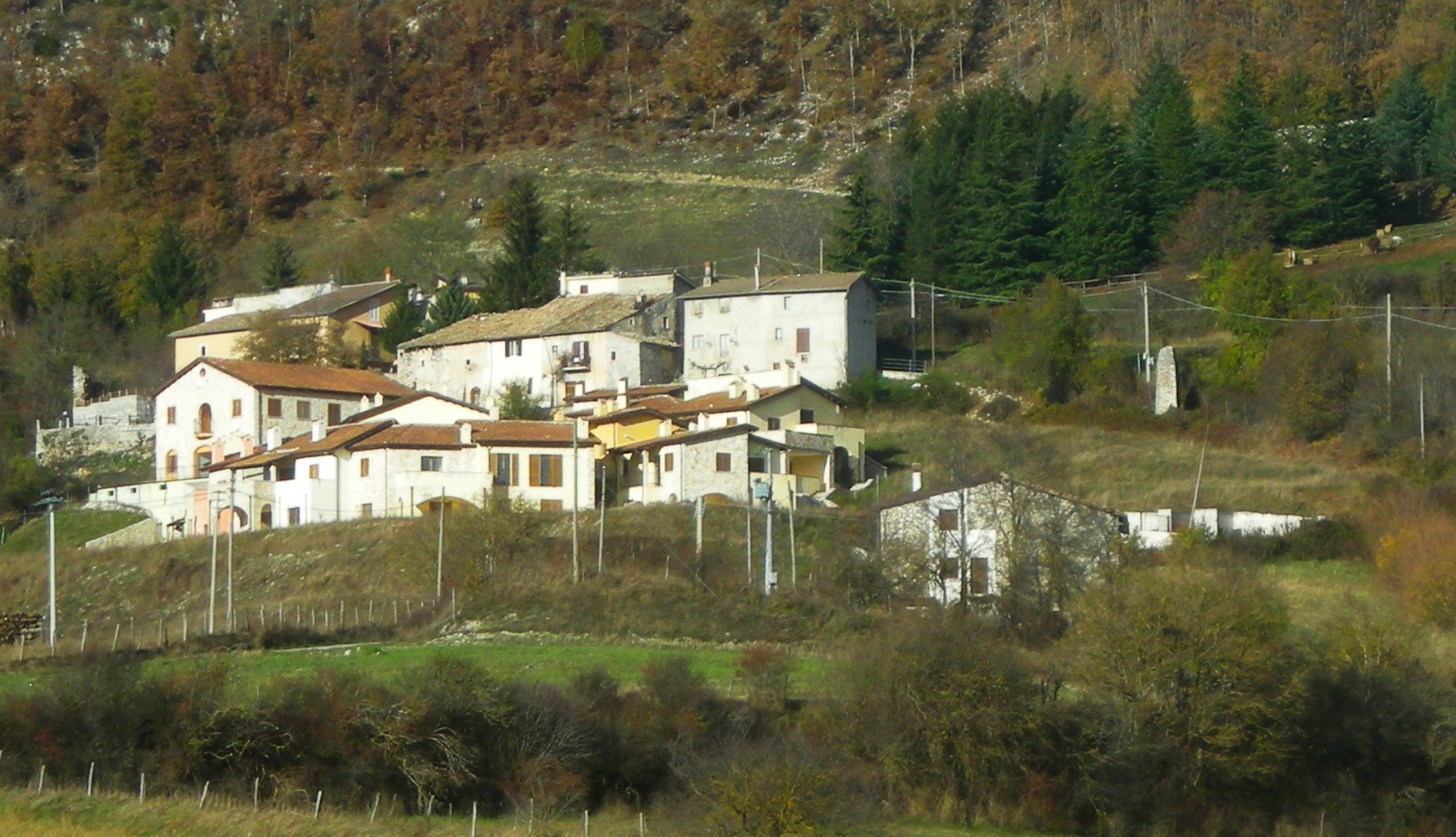
Butino (district of Monteleone di Spoleto) is on the slopes of Birbone Mount, with an older core, placed around the small church of Santa Maria degli Angeli, dating back to the XVI century and originally dependent on the Franciscans.
The settlement, scarcely populated today, is a pleasant Summer center and nearby there are the famous mines of Terrargo, active in XVIII century. Butino name [Butino] refers to the particular wealth of water sources, as Budino-Butino means "booty", "small barrels", a place of water storage or water tank. It is curious the presence of a high brick structure, a work of hydraulic engineering dating between XVII and the early XIX century, pertinent to the oldest aqueduct of Monteleone (XVI century). Called by the local elders "the vent of the old source”, it is in fact a typical “vent tower” whose twin is in San Giovanni Battista, inside Porta Spoletina, unfortunately lost in the recent decades. Butino (Monteleone di Spoleto) is on the slopes of Birbone Mount, with an older core, placed around the rural church of Santa Maria degli Angeli, 989 meters a.s.l. The Madonna degli Angeli is a modest country chapel of XVI century, with double-pitched roof and a small bell tower. D. Ansano Fabbi attests the original dependence of the church to the Conventual Franciscans of Monteleone di Spoleto, who, dedicating it to the Madonna degli Angeli, want in this way to perpetuate the memory of the Portiuncula. The fact that the feast is celebrated on the first Sunday of August suggests a direct reference to the "Forgiveness" or "Forgiveness of Assisi", which falls on 2nd August. Previous to this building, there is the Church of Saint Gregory of Butino of 1334 (cited on the list of Rationes Decimarum, at the no. 5930), otherwise unknown. Butino name [Butino] reflects the particular richness of water springs and sources. In fact Budino-Butino generally means "booty", "small barrels", a place of water storage or tank. Butino has two other synonymous still present in the nearby villages, one in Foligno (PG) and another in the municipality of Sefro (MC). Just beyond the town cemetery, after leaving on the right the road to Poggiodomo and Gavelli and climbing near the group of the most ruined houses, enjoying an excellent view of the surroundings, there is a high and unusual masonry structure at the old road layout, a hydraulic engineering work dated between XVII and early XIX century, belonging to the oldest aqueduct of Monteleone di Spoleto (XVI century). The local elders use to call it "the vent of the old source." It is in fact a typical "vent tower" for the underlying pipe, which has its twin in San Giovanni Battista, inside Porta Spoletina, the likely site of water gathering and water supply in the country. This work is unfortunately lost over the past decades. The aqueduct that takes water from the town of Pozzolano, from Pezzolano or Forcella di Vetranula font, near the late medieval town of Vetranula-Vetralla, is remembered in the most ancient statutes of Monteleone, written between 1587 and 1588 on a previous statute (presumably between 1562-1565). The nineteenth register, Book I, in fact describes all the news related to a "water conduit of the fonts of Pozzolano and of Capeta to be kept", while it mentions sporadic news about a masonry conductor in the fields between Butino and Monteleone. The "Villa of Budino" is remembered during a visit by the bishop Lascaris in Monteleone, between 3rd and 10th October 1712. In 1829, a short description cites: "BUTTINE. Village of Monte Leone subject to that authority; Cascia Government, District and Diocese of Norcia, Delegation of Spoleto, 109 souls". The settlement, now populated by a small number of permanent residents, is a pleasant Summer center. The origin or foundation must be found in its close relationship with old roads and ancient trade. In fact, the road from Monteleone splits into two paths that, bypassing Birbone Mount (m. 1386 a.s.l.), gather again in Monte San Vito (district of Scheggino m. 926 a.s.l.), before descending rapidly towards the Valnerina. Nearby, within walking distance, there are the famous mines of Terrargo, active in XVIII century. It also includes Villa Cesi, Church of Madonna delle Grazie, Casale Pozzolano or Castellina, Casale Caserta or Baiocco, Pozzolano Source, Source of Terrargo, Casale Ranali (memory of Ranalli-Rinaldi family).
Image gallery


